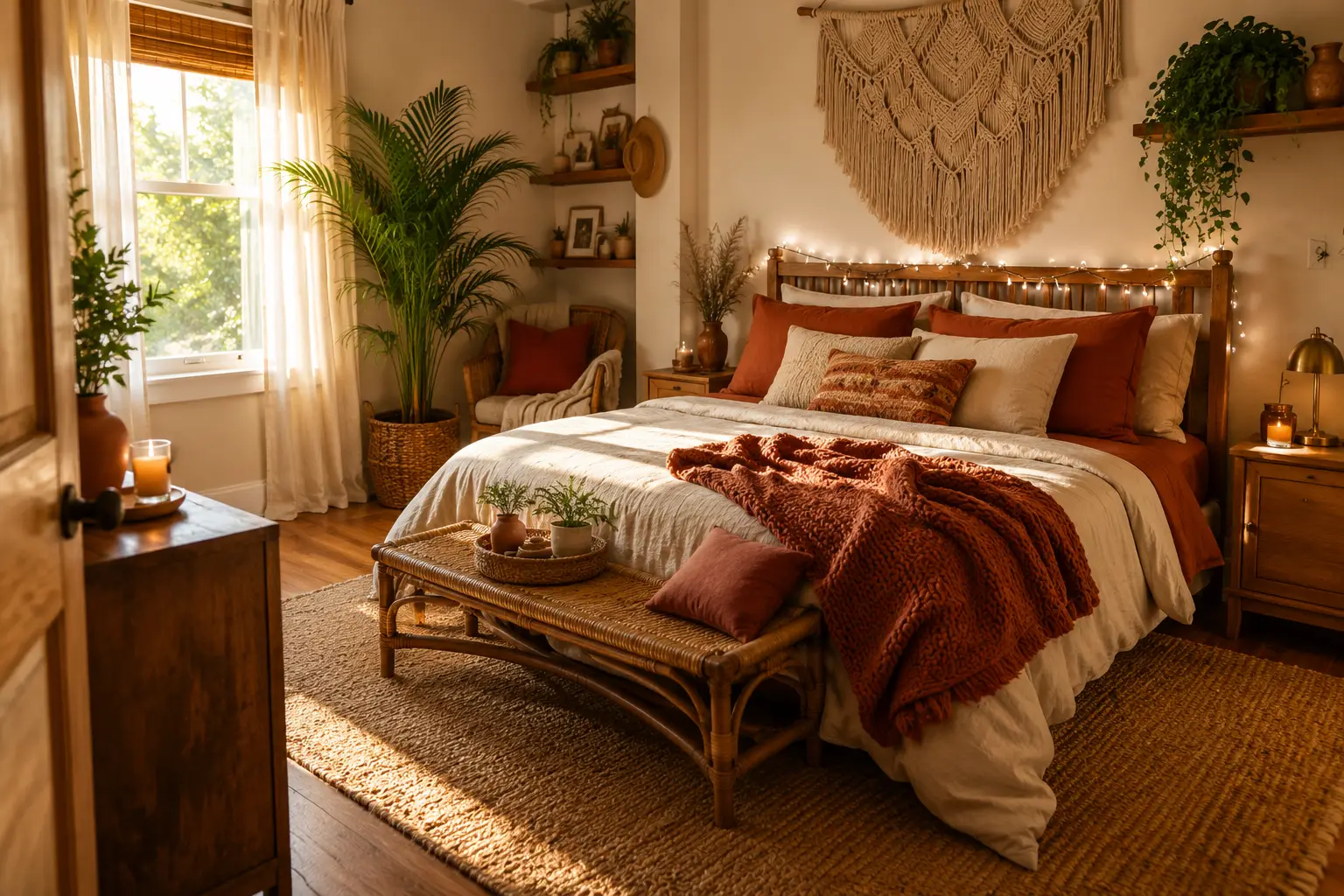
You’ve pinned a hundred boho bedrooms. Rattan headboards, layered rugs, a wall of plants. But every time you try it at home, it ends up looking like a thrift store threw up in your bedroom instead of that warm, collected space you saw online. That gap between “inspired” and “actually pulled off” is where most people quit.
This guide walks you through real boho bedroom ideas in the order you need to do them — starting the room from empty and building up, layer by layer, until it feels lived-in instead of chaotic. The trick isn’t buying more. It’s choosing fewer things on purpose and letting texture and warmth do the work color alone can’t.
Plan for one to two weekends if you’re shopping as you go, or one afternoon if your pieces are already on hand. None of this requires tools beyond a tape measure and a level. What it does require is patience between steps — some of this room comes together slowly, and that’s part of what makes boho work in the first place.
Clear a little time, and let’s get your room started.
- ☐ Tape measure and a level
- ☐ Paint sample pots (3 colors)
- ☐ Painter’s tape
- ☐ Fitted sheet, duvet cover, throw
- ☐ 2–4 mixed-texture pillows
- ☐ Textured area rug
- ☐ One rattan or curved-line furniture piece
- ☐ One tapestry or macrame hanging
- ☐ Slim curtain rod or 2 heavy-duty hooks
- ☐ Nightstand lamp, string lights, floor lamp
- ☐ 3 plants, 3–5 frames, craft paper, nails
- ☐ Personal objects (books, baskets, candles)
- Clear the room and decide what stays
- Pick a warm, neutral color palette first
- Layer your bedding with natural textures
- Anchor the space with a textured rug
- Choose furniture with curved or natural lines
- Hang a textile above the bed for a focal point
- Build three layers of lighting
- Add plants at different heights
- Build a small gallery wall
- Finish with collected, personal objects
Clear the Room and Decide What Stays
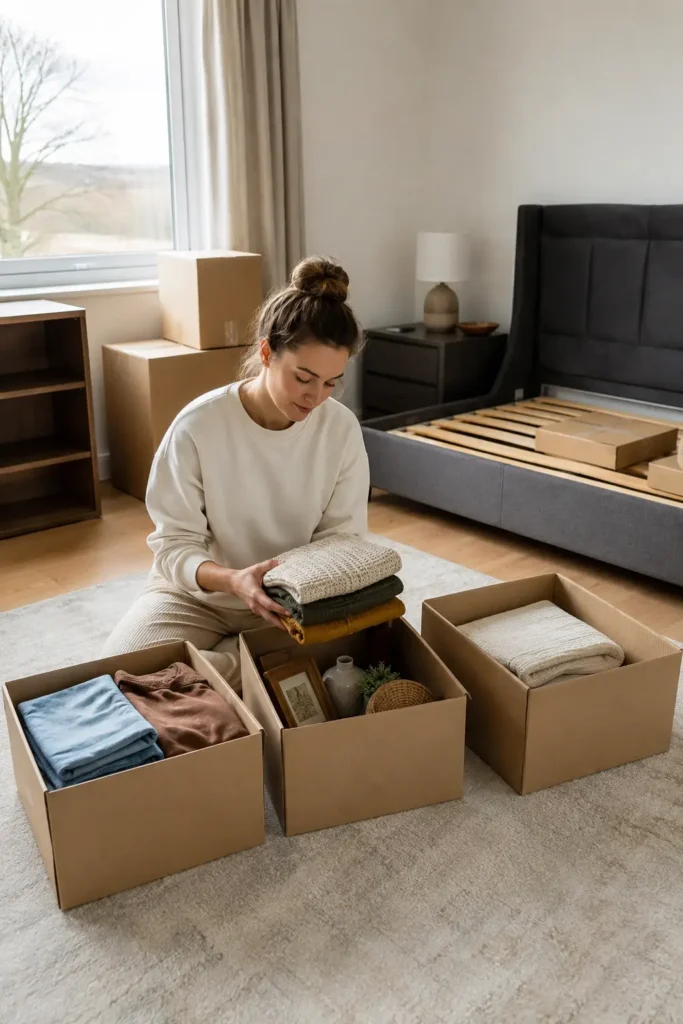
Grab three boxes and label them Keep, Donate, and Storage. Walk the room and sort fast — don’t overthink single items. Boho works when every piece earns its spot, not when the room is packed with everything you own. Give yourself 30 minutes and set a timer. Stalled on something for more than 10 seconds? Drop it in Storage and revisit it later, once the bones of the room are in place.
Pick a Warm, Neutral Color Palette First
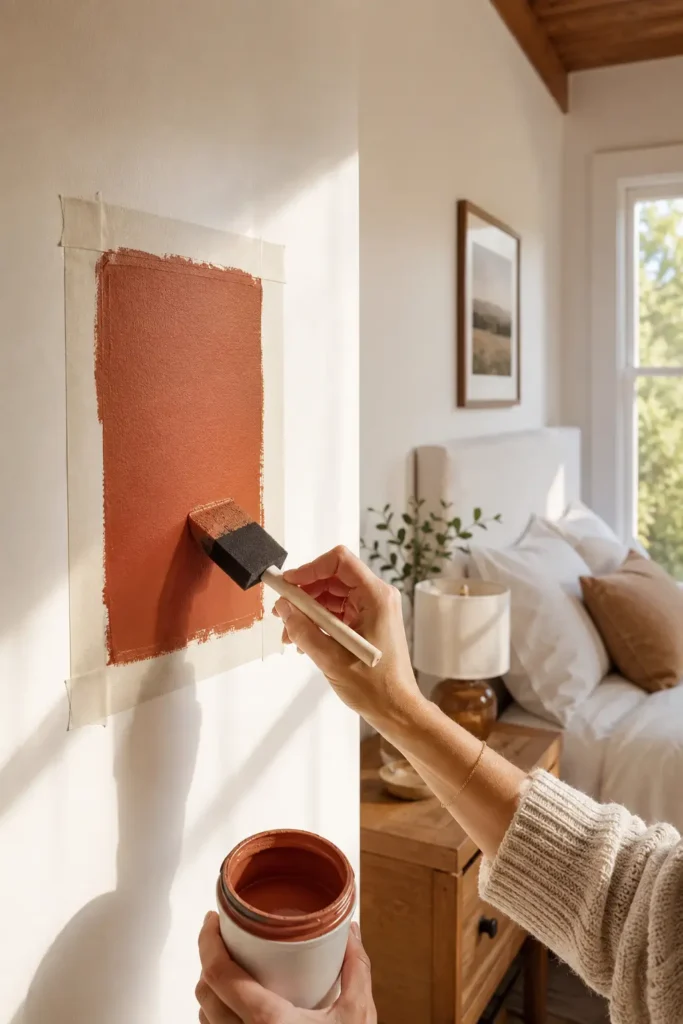
Three colors are enough to start: a warm white or cream for the base, one warm neutral like terracotta or rust for the middle, and one deep accent such as charcoal or forest green. Buy small sample pots before committing to full gallons. Tape swatches on three different walls and check them over 2 days, since light shifts color from morning to night. If bright white feels too stark once it’s up, our guide to creating a cozy dark boho bedroom that still feels warm shows you how to flip this same palette darker instead.
Layer Your Bedding With Natural Textures
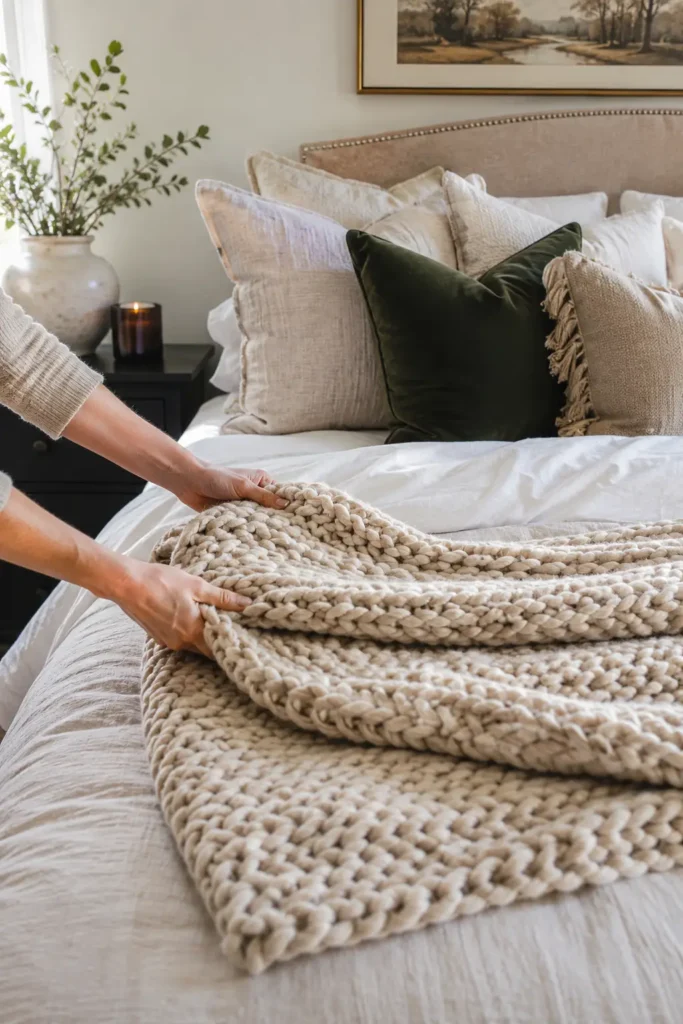
Layering happens in order, bottom to top:
- Fitted sheet in a solid neutral color
- Flat sheet or duvet cover in a warm tone
- One wool or knit throw, folded across the foot of the bed
- Two to four pillows in mixed textures — linen, velvet, woven cotton
Mixing textures, not just colors, is what makes a bed look layered instead of matchy. A smooth sheet against a chunky knit throw does more visual work than three throw pillows in the same fabric ever will.
Anchor the Space With a Textured Rug
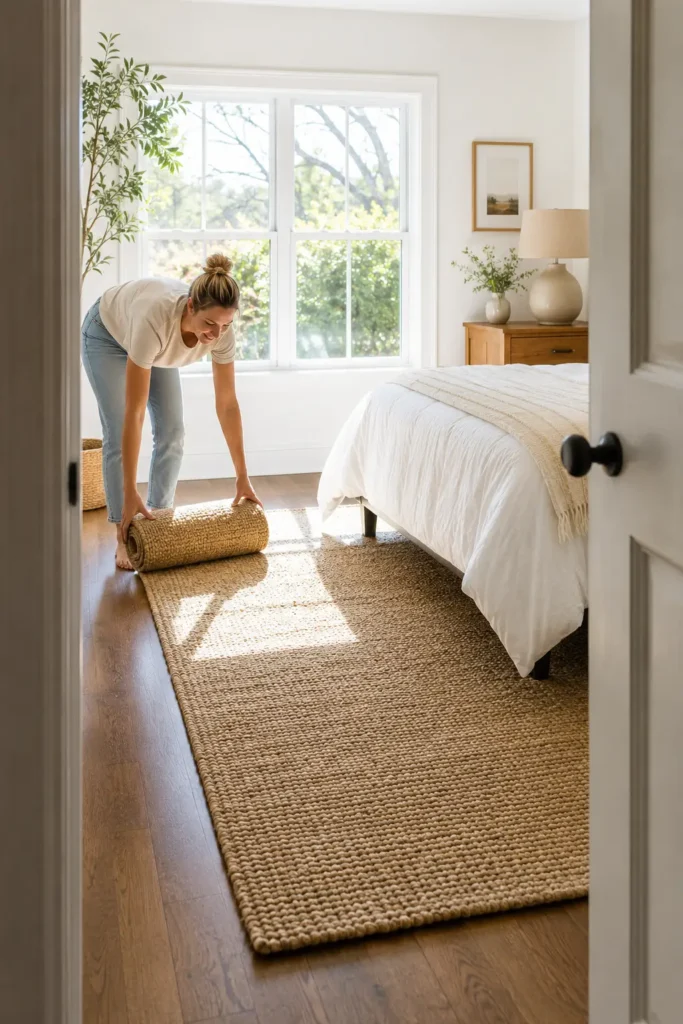
If your floor is bare wood or plain carpet, this step changes the whole feel of the room fast. Choose a rug with visible texture — jute, shag, or a flatweave with pattern — rather than something flat and smooth. Center it under the bed so it extends 18 to 24 inches beyond each side and the foot. A too-small rug is the single most common mistake in this whole room, and it makes an otherwise nice setup look unfinished.
Choose Furniture With Curved or Natural Lines

Boho furniture skips hard right angles on purpose. Look for rounded edges, rattan, cane webbing, or light unfinished wood when picking a nightstand, chair, or bench for the room. If you’re starting from scratch or replacing bigger pieces, our full breakdown on choosing boho bedroom furniture for a relaxed, curated look walks through exactly what to shop for and what to skip.
Hang a Textile Above the Bed for a Focal Point

One tapestry, one macrame hanging, or one vintage rug turned wall piece — pick just one, since two competing focal points cancel each other out. Measure so the top edge sits 6 to 8 inches above the headboard, or above the mattress if you don’t have one. Use a slim curtain rod or two removable hooks rated for at least 10 pounds, depending on the textile’s weight. Center it using the width of the bed as your guide, not the wall. Step back and check it’s straight before you commit to the final nail holes.
Layer Three Types of Lighting
One ceiling light does not make a room feel warm — it makes it feel like an office. Boho bedrooms rely on layers instead:
- A warm-toned lamp on the nightstand (look for 2700K bulbs, not bright white)
- String lights along a headboard, shelf, or window frame
- A floor lamp or second lamp across the room for balance
Turn off the overhead light entirely once these three are in place, and see how different the room feels by evening.
Add Plants at Different Heights
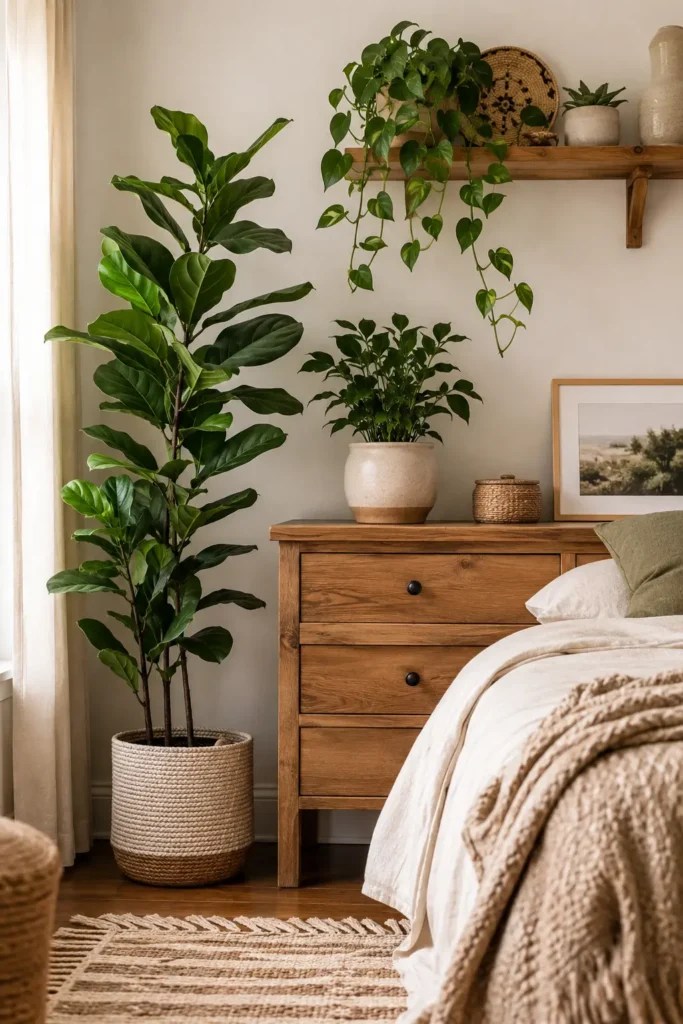
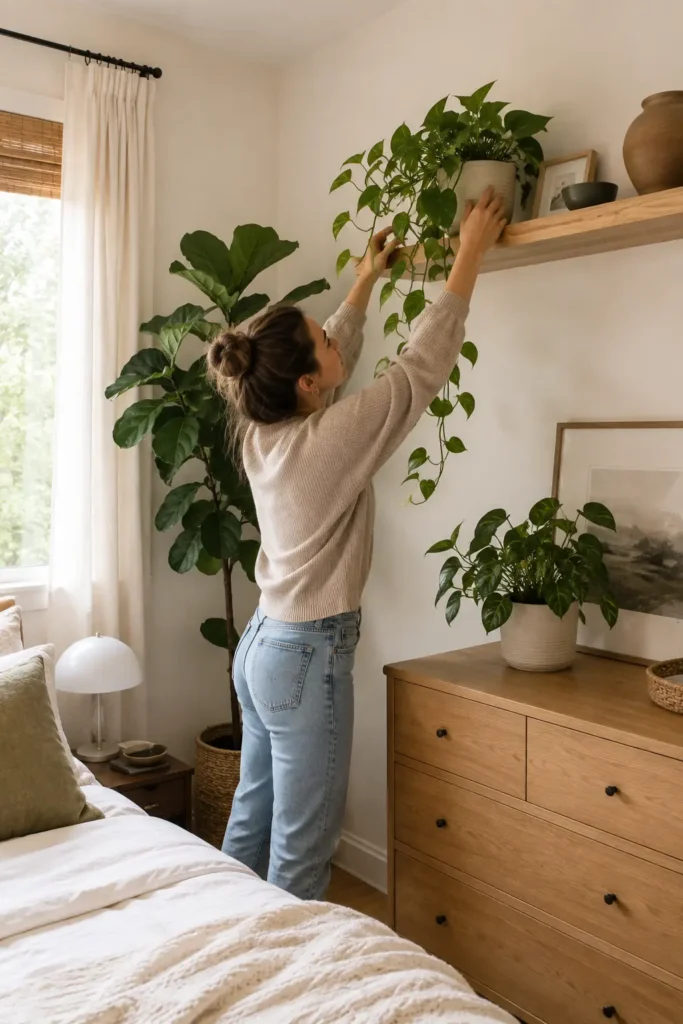
A single plant on the floor reads as an afterthought. Three plants at different heights — a tall one in a floor planter, a medium one on a dresser, a trailing one on a high shelf — read as intentional. Pothos and snake plants are forgiving choices if you’re new to keeping anything alive, since both tolerate low light and irregular watering. Wait 1 week after placing them before deciding a spot isn’t working. Plants often sulk right after being moved, and that droop is not always permanent.
Build a Small Gallery Wall
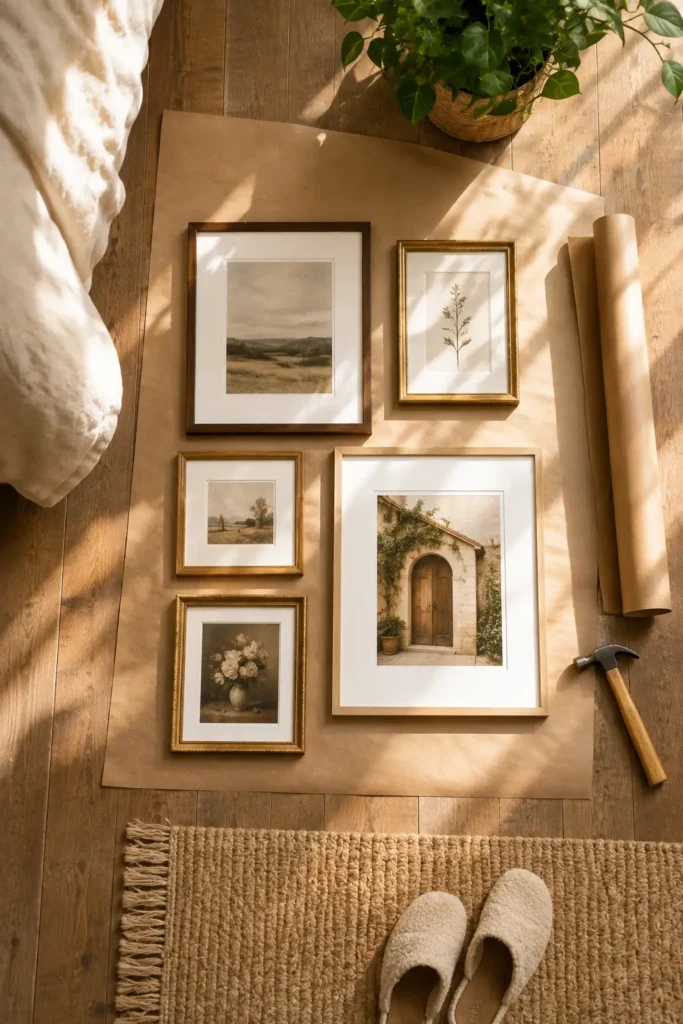
Ready to commit to nail holes? Lay your 3 to 5 frames on the floor first and arrange them there before anything touches the wall. Keep gaps between frames between 2 and 3 inches for a collected look instead of a cluttered one. Trace the arrangement onto craft paper, tape the paper to the wall, and hammer nails through the paper at your marked points — then peel it away. This one trick saves you from a wall full of guess-holes.
Finish With Collected, Personal Objects
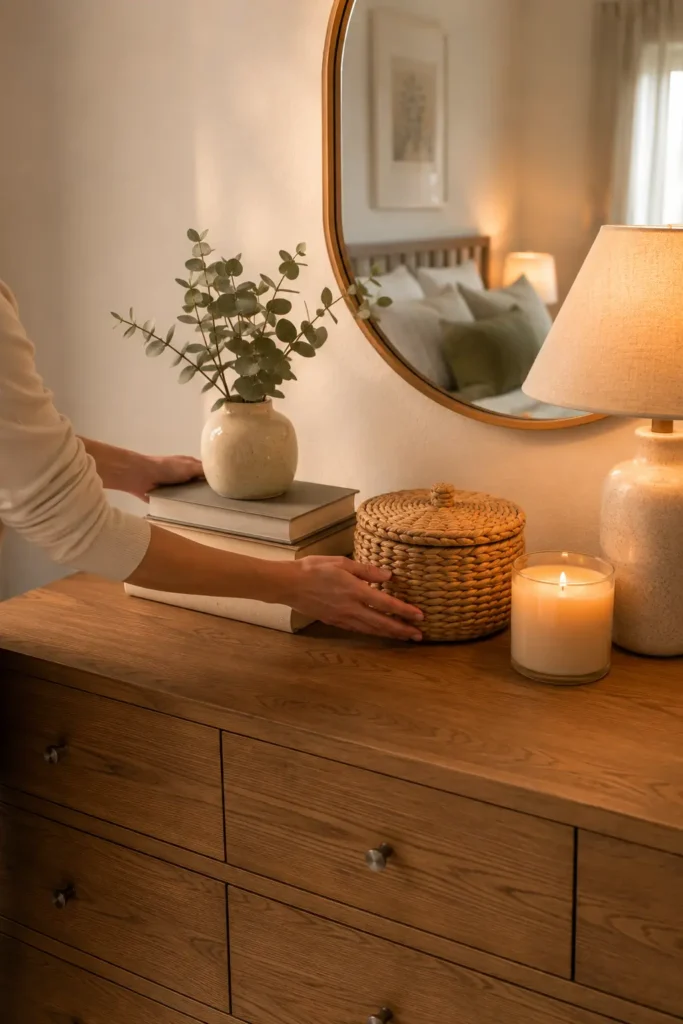
Empty surfaces are where boho falls apart. Fill your dresser top, shelves, and nightstand with a mix of things that actually mean something — a stack of books you’ve read, a small woven basket, a candle, a piece from a trip or a flea market. Group items in sets of odd numbers, like three or five, since odd groupings feel more natural to the eye than even ones. This step has no wrong answer. It’s the one place in the whole room where “matching” was never the goal.
Common Mistakes & FAQ:
Buying the rug last. A rug bought as an afterthought almost never matches the palette you settled on earlier. Pick it right after your bedding, while the color story is still fresh.
Hanging two focal pieces at once. A tapestry and a shelf of frames above the bed compete for attention instead of working together. Pick one wall focal point and let everything else stay lower and quieter.
Matching every wood tone in the room. Boho furniture is meant to look gathered over time, not bought as a set. A little variation between your nightstand and your bench is normal, not a mistake.
Skipping the swatch test. A color that looks warm under store lighting can turn muddy or cold in your actual room. Always tape samples up and check them over a couple of days first.
Overcrowding the plant shelf. More than three plants in one cluster starts to look like storage instead of styling. Spread them across different heights in the room instead of bunching them in one corner.
Can I do this in a rental with no drilling allowed? Yes. Use removable adhesive hooks rated for at least 10 pounds for your tapestry, and command strips for lighter frames on your gallery wall.
My bedroom is small — will this still work? It works even better in small rooms. Stick to one rug, one wall focal point, and 3 plants max, so the space feels cozy instead of packed.
How much should I expect to spend? A basic refresh using pieces you already own plus a rug, bedding, and lighting usually lands between $150 and $400, depending on the rug.
How long until the room actually feels finished? Most people feel it come together after the rug and bedding are in, around the halfway point. The last 20% — plants, gallery wall, personal objects — is what makes it feel lived-in rather than staged.
Do I need real plants, or can I use fake ones? Fake plants work fine for the height and texture they add. If you go real, pothos and snake plants are the most forgiving for beginners.
Tape measure, level, 3 paint samples, painter’s tape, bedding set, textured rug, one curved-line furniture piece, one tapestry, curtain rod or hooks, nightstand lamp, string lights, floor lamp, 3 plants, 3–5 frames, craft paper, nails, personal objects.
- Clear the room, sort into Keep/Donate/Storage
- Pick 3 palette colors, sample for 2 days
- Layer bedding: sheet, cover, throw, pillows
- Center a textured rug, 18–24 in. overhang
- Add curved-line, natural-material furniture
- Hang one focal textile, 6–8 in. above headboard
- Layer 3 lights: lamp, string lights, floor lamp
- Add 3 plants at different heights
- Arrange gallery wall on the floor, then trace and hang
- Finish shelves with personal objects, odd numbers
Wrapping Up
Your room now has a palette, a dressed bed, an anchored floor, and light that actually feels warm at night. That’s most of the work. What’s left is the slow part — letting plants settle, swapping objects until the shelves feel like yours, maybe circling back to that gallery wall in a month.
These boho bedroom ideas work because you built them in order, not all at once. Next, if the bright palette feels too stark once it’s up, our guide to a cozy dark boho bedroom that still feels warm shows you how to flip it.
Save this pin so you can come back to each step as you go.