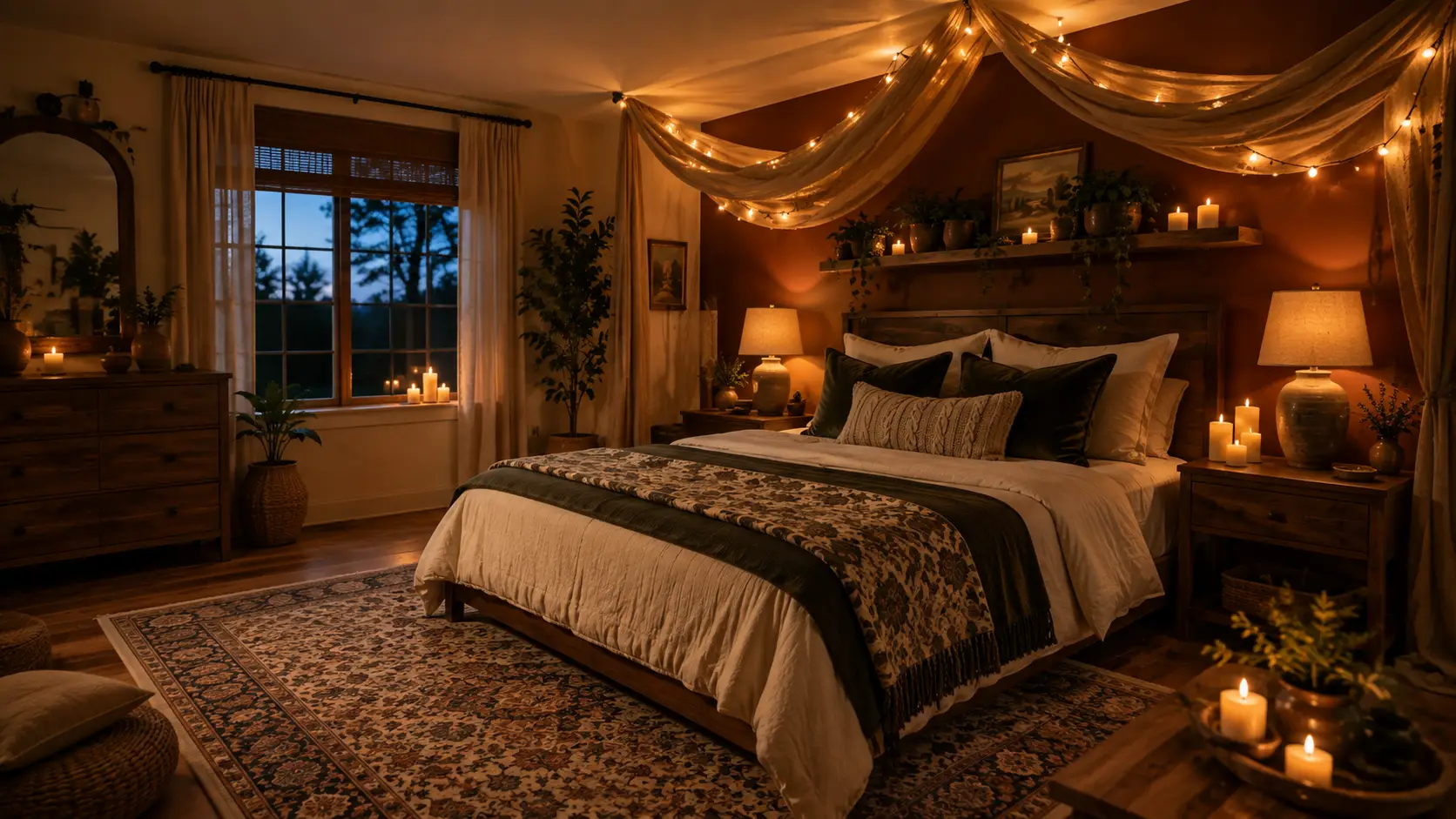
Your bedroom looks fine. It doesn’t feel like much of anything, though. White walls, matching furniture, a throw pillow that doesn’t match the mood you’re actually going for. If you’ve been scrolling photos of deep jewel-toned walls, layered rugs, and candlelight for weeks without doing anything about it, this guide is the push you need.
Below you’ll find the exact steps to build a cozy dark boho bedroom that still feels warm instead of cave-like — because dark colors done wrong look like a basement, and that’s not the goal here. The trick is combining a warm-toned dark wall color with layered textures, plants, and low, golden light instead of one overhead bulb.
You don’t need a full renovation for this. Most of the work is paint, textiles, and rearranging what you already own. The wall painting is the only step with real drying time attached to it. Everything else — the bedding, the plants, the lighting — can happen in a single afternoon once the paint has cured.
Grab your paint samples, clear a little floor space, and let’s build a room you actually want to fall asleep in.
What You Need
- Sample pots of 2-3 warm dark paint colors
- Painter’s tape
- Roller, brush, and paint tray
- Drop cloth
- Primer (if wall is currently light)
- Duvet cover in a solid warm tone
- Patterned throw blanket
- 4-6 mixed-texture pillows
- Patterned area rug
- String lights or a sheer canopy fabric
- 3-5 potted plants
- Candles or warm-bulb lamps
At a Glance
- Choose your dark wall color first
- Paint the walls for your cozy dark boho bedroom
- Layer your bedding with warm, patterned textiles
- Add a patterned area rug underneath
- Hang string lights or a sheer canopy above the bed
- Bring in live plants for texture and life
- Style a gallery wall or floating shelf
- Finish with candles and warm-toned lamps
Step 1: Choose Your Dark Wall Color First
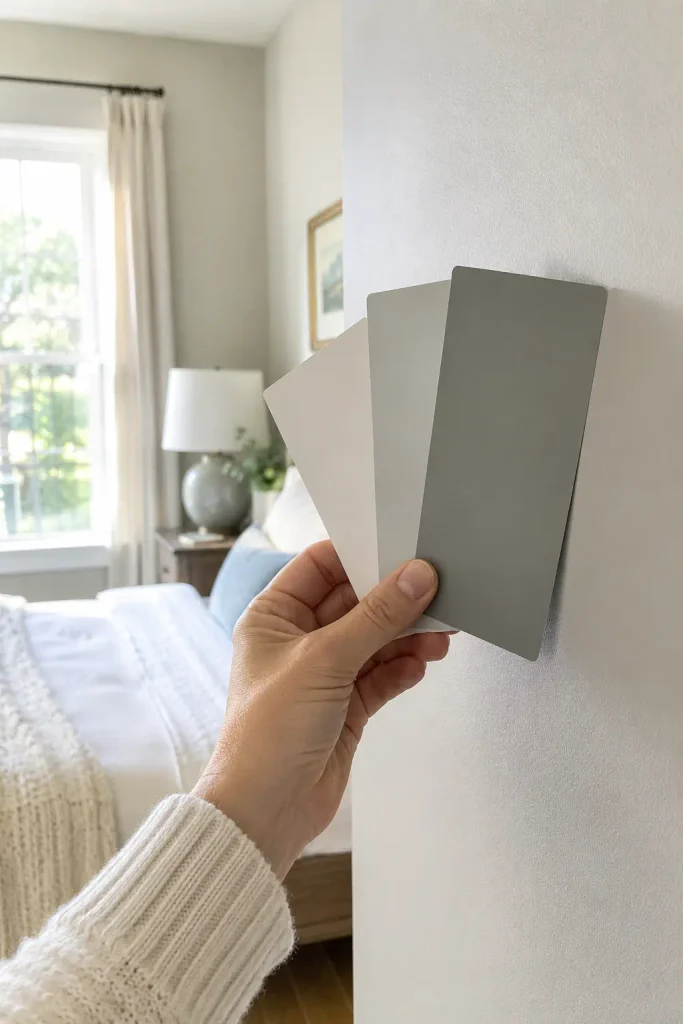
Dark doesn’t have to mean cold. Warm-toned colors like burnt terracotta, deep rust, or a warm aubergine keep a boho bedroom feeling inviting instead of like a cave. Cooler tones — true navy, charcoal gray, black — tend to flatten the room under regular bulb light. Buy two or three sample pots and paint 2-foot swatches directly on the wall. Look at them in daylight and again after dark with your lamps on, since paint shifts color dramatically between the two.
Step 2: Paint the Walls for Your Cozy Dark Boho Bedroom
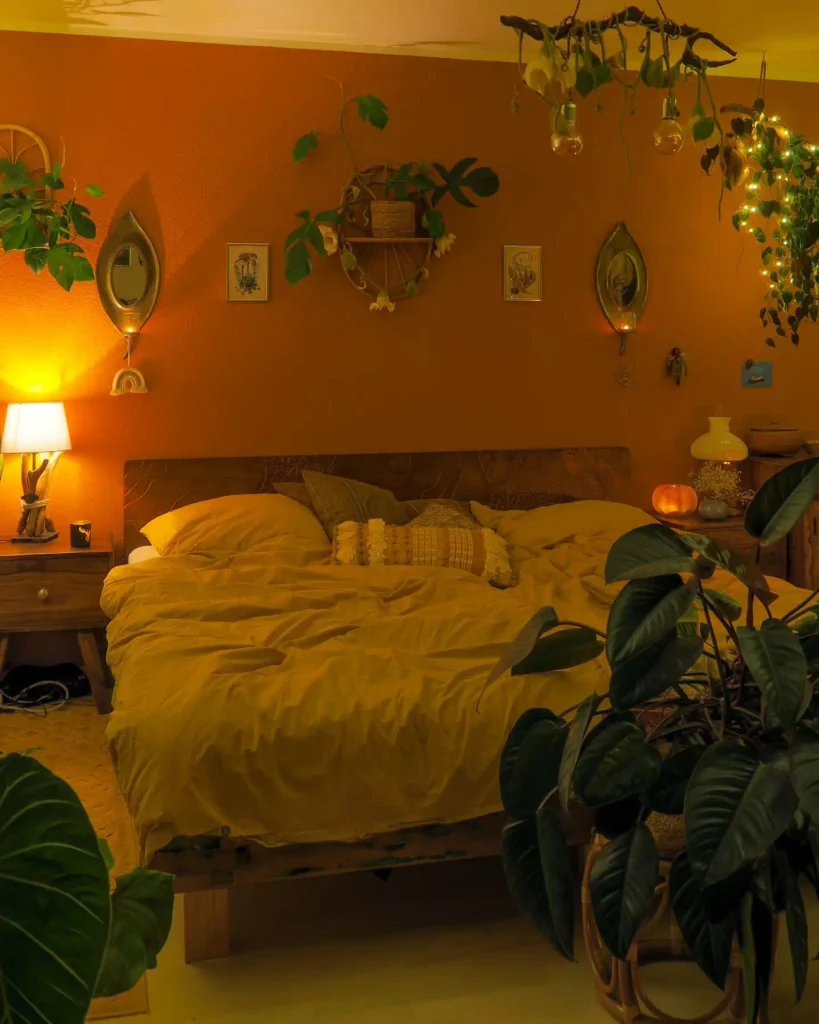
Tape off trim and outlets before you open the can. If your current wall is a light color, roll on a thin coat of primer first and let it dry for 1 hour — dark paint covers more evenly over primed drywall than it does fighting an old light color underneath. Apply your chosen color in two coats, waiting 4 hours between them so the first coat sets fully. Matte or eggshell finishes hide roller marks better than gloss, which matters in a room full of texture.

Step 3: Layer Your Bedding With Warm, Patterned Textiles
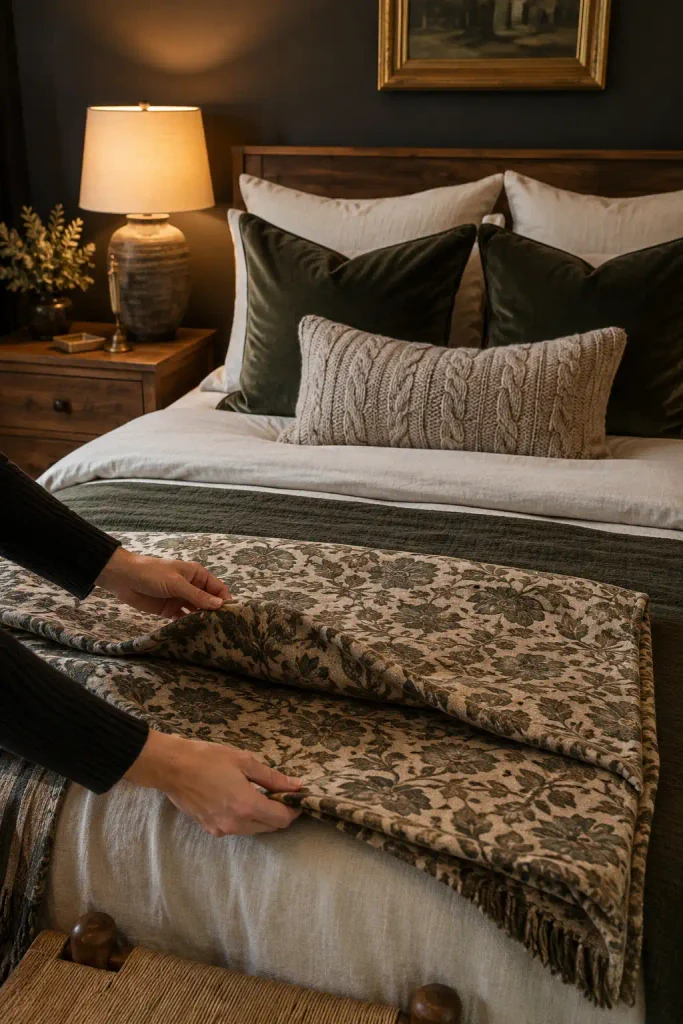
A matching bedding set reads more hotel than boho. Build the layers instead:
- Fitted sheet and duvet in one solid, warm tone
- A patterned throw folded across the foot of the bed
- 2 standard pillow shams plus 3-4 accent pillows in mixed textures
- One lumbar or oddly-shaped pillow to break up the row
Mix at least two pattern scales — one busy print, one smaller print — so the pile doesn’t look flat. Velvet next to a woven throw adds the texture contrast that makes this style work.
Step 4: Add a Patterned Area Rug Underneath
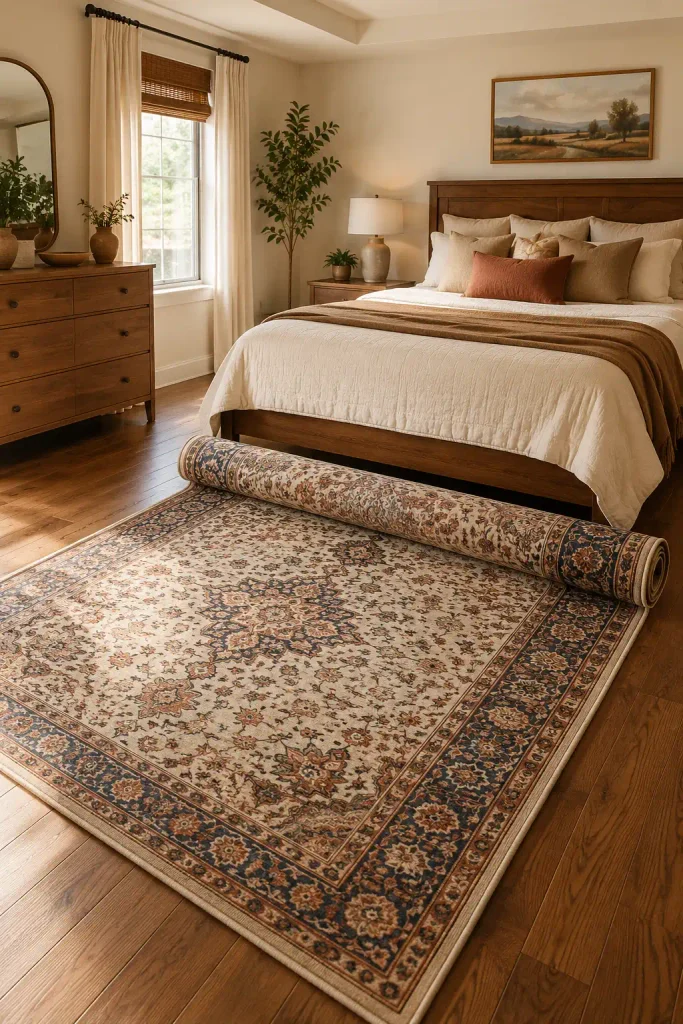
If your flooring is light oak or pale laminate, a rug does more work here than almost anything else on this list. Choose one with warm reds, rust, or deep blue woven through the pattern — solid neutrals tend to disappear against a dark wall instead of grounding the room. Size it so at least 2 feet of rug extends past each side of the bed frame.
Step 5: Hang String Lights or a Sheer Canopy Above the Bed
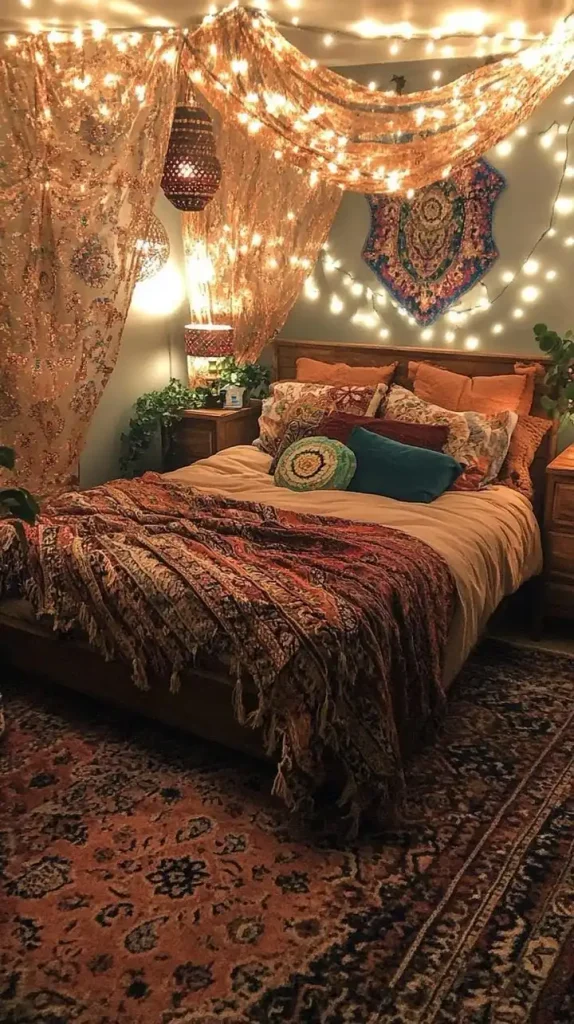
Two options work well above the bed, and neither needs real tools beyond a few hooks. Drape a length of lightweight fabric — muslin, cheesecloth, or a thin curtain panel — across a tension rod or ceiling hooks, then weave a strand of warm-white string lights through the folds before it hangs fully. Battery-powered lights skip the cord dangling down behind the headboard, which matters if there’s no outlet nearby.
Step 6: Bring In Live Plants for Texture and Life
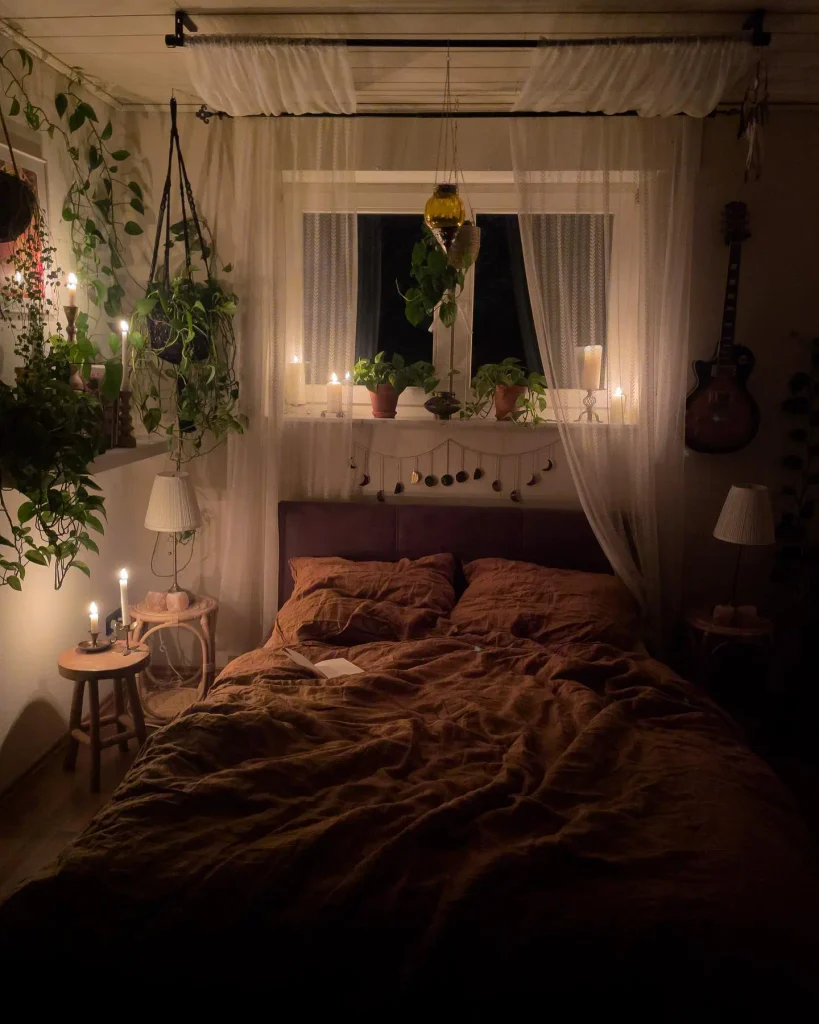
A dark wall makes green leaves pop in a way a white wall never quite manages. Pick 3 to 5 plants in a mix of heights — a trailing pothos on a shelf, a taller snake plant on the floor, something small on the nightstand. Low-light varieties like pothos, snake plant, and ZZ plant tolerate bedrooms with limited window light, since most bedrooms don’t get the bright indirect light a south-facing living room does.
Step 7: Style a Gallery Wall or Floating Shelf
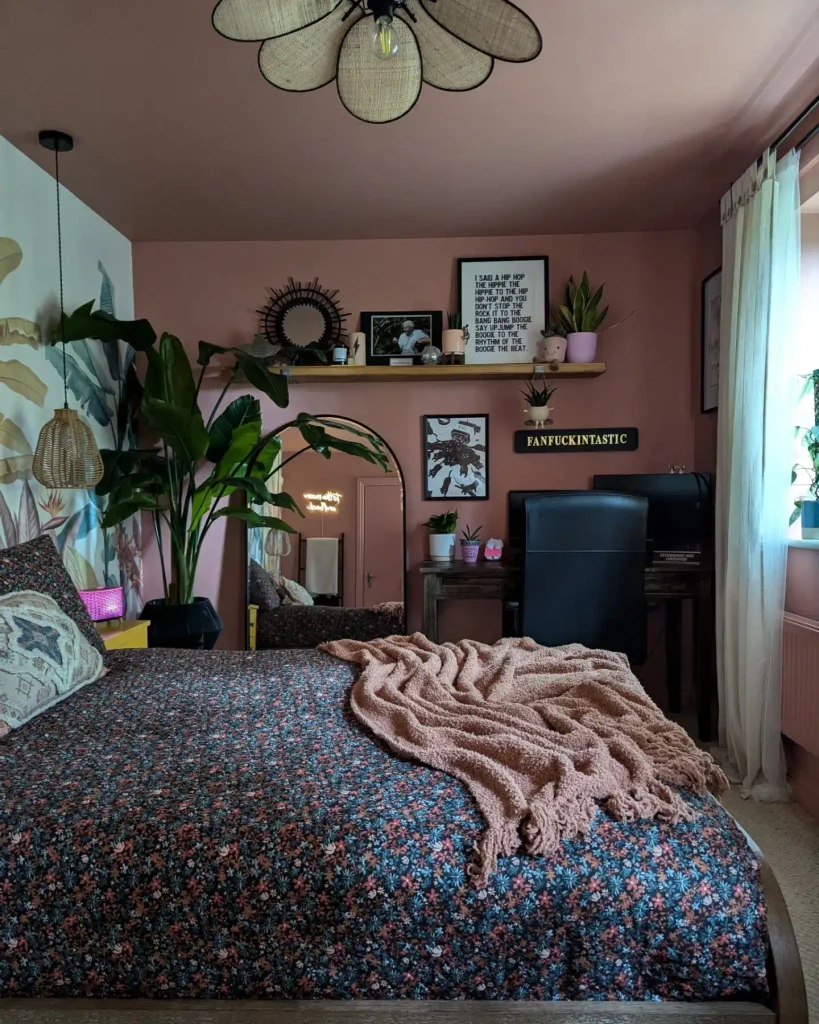
What’s currently on your walls — a single framed print, bare space, a mirror that doesn’t match anything else? A floating shelf solves this fast. Mount one 6 to 8 inches above eye level and layer it with a small mirror, a framed photo, one or two plants, and a piece of art with personality. Uneven heights read as curated. A perfectly straight row of matching frames reads as store display — mix it up on purpose.
Step 8: Finish With Candles and Warm-Toned Lamps

One overhead light flattens everything you just built. Swap it for 2 to 3 smaller light sources instead — a bedside lamp, a floor lamp in the corner, a cluster of candles on a nightstand or windowsill. Use bulbs rated 2700K or lower, since anything higher reads closer to office lighting than the golden, low glow this style depends on. Real or flameless candles both work; grouping 3 different heights together looks more intentional than one candle alone.
Common Mistakes
Cool darks absorb light instead of holding onto it, which is what makes a room feel cold rather than cozy. Stick to colors with red, orange, or brown undertones.
A single bright bulb overhead washes out the dark wall color and kills the mood instantly. Layer in lamps and candles instead.
A duvet, rug, and pillows in the exact same print looks flat rather than layered. Pair a busy pattern with a smaller-scale one for contrast.
Dark paint over unprimed light drywall often needs a third or fourth coat to look even. Ten minutes of priming saves an entire extra coat later.
FAQ
Slightly, but warm tones and layered lighting counter that effect far more than people expect. Rooms under 120 square feet benefit from keeping the ceiling a lighter color to preserve height.
No. One accent wall behind the headboard gets you most of the mood with half the paint and half the drying time.
A large tapestry or fabric panel hung behind the bed creates a similar dark backdrop without touching the wall at all.
Once airflow around the bed feels blocked, that’s the limit. Most bedrooms comfortably hold 5 to 7 plants before it starts feeling crowded rather than cozy.
Warm dark paint samples, primer, roller/brush, solid duvet, patterned throw, mixed pillows, patterned rug, string lights or sheer fabric, 3-5 plants, candles/warm lamps.
- Choose your dark wall color first
- Paint the walls (primer + 2 coats, 4 hrs between)
- Layer bedding with warm, patterned textiles
- Add a patterned rug, extending 2 ft past the bed
- Hang string lights or a sheer canopy above the bed
- Add 3-5 plants at mixed heights
- Style a floating shelf or gallery wall
- Swap overhead light for lamps + candles (2700K or lower)
Conclusion
Your bedroom now has a wall color that holds light instead of flattening it, bedding with real texture, and lamps doing the job one harsh overhead bulb never could. That’s the whole trick behind a cozy dark boho bedroom — warmth stacked in layers, not one big dramatic change.
Next, try swapping your lamp bulbs seasonally, since warmer bulbs in winter and slightly brighter ones in summer keep the room feeling right year-round.
Pin this now so you’ve got the steps ready when you’re ready to start painting.