Coffee bar ideas
Coffee bar ideas fit any kitchen, from a simple cart to a full cabinet, and each works when every item has one place. This hub covers layouts, shelving, lighting and styling for a home coffee bar of any size.
Start with the three guides below if you’re not sure where to begin. Most of these ideas work in rented kitchens, and every one tells you roughly what it costs.

New here? Read these three first


“A coffee bar isn’t a shopping list. It’s one corner where everything coffee lives — and nothing else does.”
All coffee bar guides
Showing: Newest first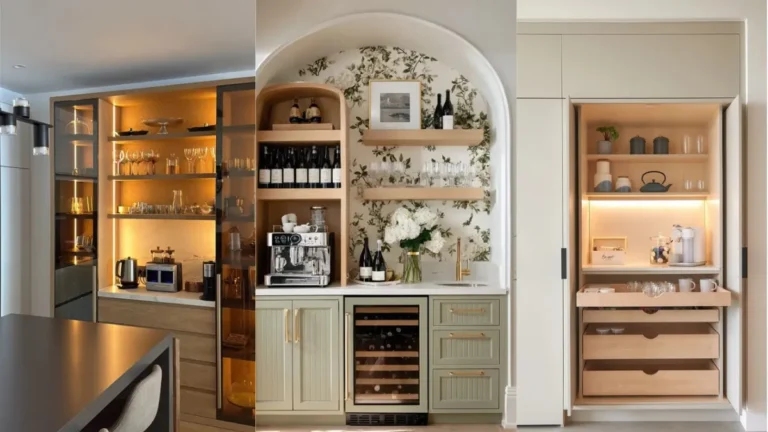
Coffee bars by style
Already know the look you want? Jump straight to the coffee bar version of it.
What goes on a home coffee bar?
A home coffee bar holds a coffee maker, a grinder, mugs, beans, a milk station and a place for sweeteners and stirrers. A home coffee station needs a counter or shelf about 60 cm (24 in) wide at minimum, a power socket within reach and storage for everything you use daily.
8 items every coffee bar needs
- Machine: an espresso machine, drip brewer or pour-over kit.
- Grinder: a burr grinder for fresh beans.
- Mugs: 4 to 6 mugs on a hook rail or open shelf.
- Beans: 1 airtight canister that holds 250 to 500 g (9 to 18 oz).
- Milk: a frother, plus a mini fridge or a nearby fridge shelf.
- Sweeteners: syrups, sugar and stirrers in a small tray.
- Water: a filter jug or a plumbed-in line.
- Surface: a tray or board that protects the counter from spills.
Coffee bar ideas by space
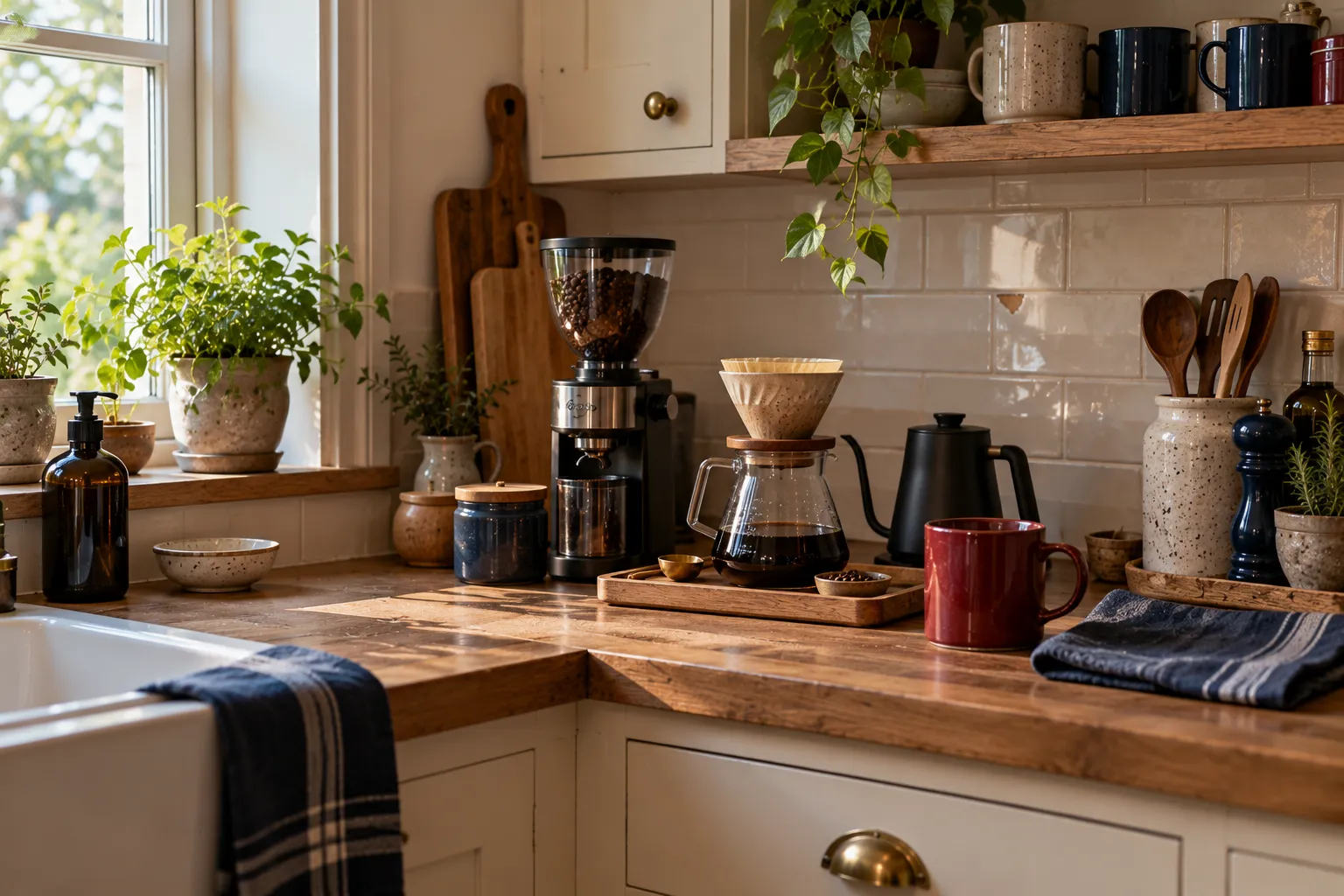
- Counter corner: a tray, 2 canisters and floating shelves above for a small coffee bar.
- Bar cart: a 2-tier cart about 40 cm (16 in) deep fits a narrow gap and moves for guests.
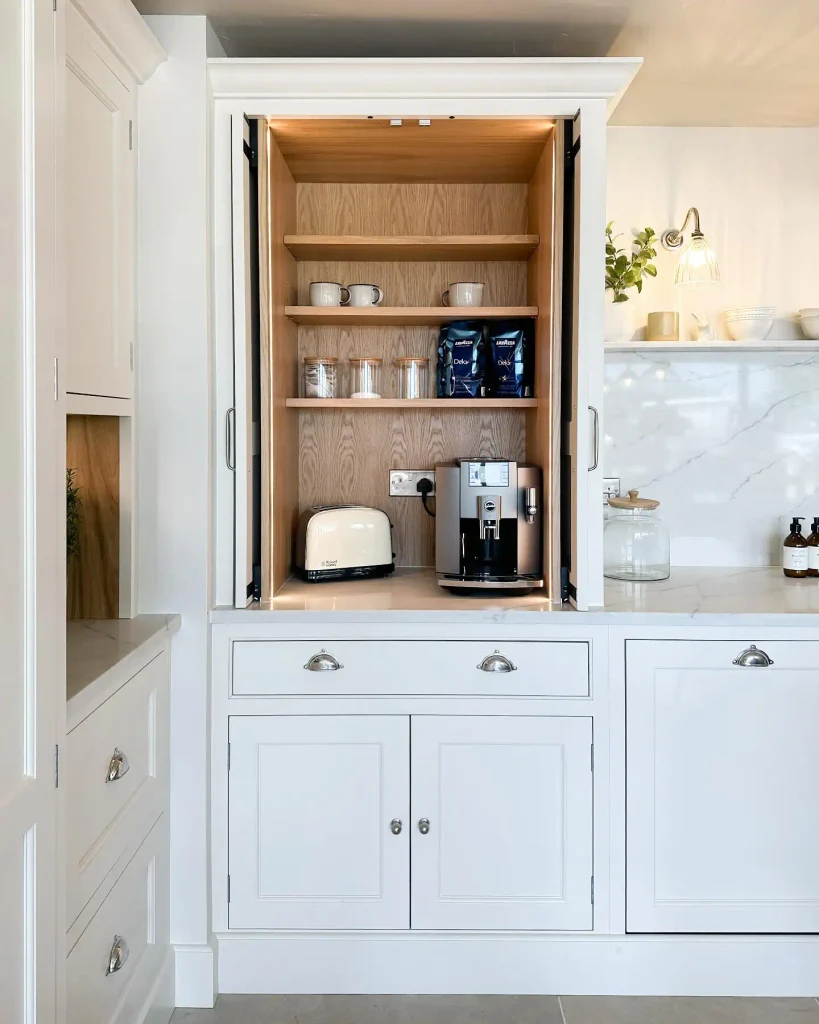
- Cabinet or pantry conversion: doors close over the mess, and a socket inside powers the machine.
- Floating shelf station: 2 shelves 25 cm (10 in) deep above a counter hold mugs and jars with a small footprint.
- Budget coffee bar: a tray, a bread-bin style canister set and a hook rail cost under £60 (about $75).
Coffee bar questions readers ask most
How much space does a coffee bar need?
Less than you’d think. 60 cm of counter or a 40 cm-wide cart is enough for a machine, a grinder and a mug tree — what matters is that everything lives in that one spot.
What should go on a coffee bar?
Only what you use daily: the machine, beans or pods, mugs, a spoon pot and sugar. Spares, syrups and gadgets go in a drawer or cupboard below so the surface stays clear.
Can I add a coffee bar in a rented kitchen?
Yes — a freestanding cart, a slim sideboard, adhesive under-cabinet lights and a leaning shelf all work without drilling or touching the landlord’s units.
What are the best coffee bar ideas for small spaces?
The best coffee bar ideas for small spaces are a counter-corner tray, a slim bar cart and 2 floating shelves. Each uses under 60 cm (24 in) of counter width.
How do I build a DIY coffee bar on a budget?
Start with a tray, 2 canisters and a hook rail for mugs, which cost under £60 (about $75). Add floating shelves later, once you know which items you use every day.
How do I keep a coffee bar organised?
Give each item one home, keep daily items within arm’s reach and store spares in a cupboard below. Wipe the tray once a day and descale the machine every 1 to 3 months.
Can a coffee bar work in a rented kitchen?
Yes. A freestanding cart, a tray and a plug-in under-shelf light need no drilling and move with you.
What is the difference between a coffee bar and a coffee station?
A coffee station is the machine, mugs and a few supplies on a counter. A coffee bar is a dedicated zone with its own shelves, cabinet or cart, storage for beans and syrups, and a spot to display mugs.
Can I put a coffee bar in a bedroom or living room?
Yes. A dresser, sideboard or rolling cart works well. You need one nearby outlet, a tray to catch drips and a quick route to water for filling the machine.
What are good coffee nook ideas for a small kitchen?
Use a corner counter, the gap between the fridge and a wall, or a wall with 1 or 2 floating shelves above the machine. Plan for at least 45 cm (18 in) of clear counter and keep mugs on the shelf above.